
High-speed, multi-spectrum optical sensors engineered to detect liquid and gas fires in fractions of a second while rejecting false alarm sources.
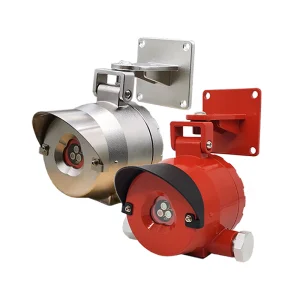
Advanced 3IR sensors filtering background solar and hot body radiation. Engineered specifically for complex industrial environments.
View Details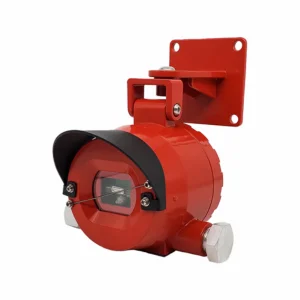
Heavy-duty housing with SIL2 design standards. High resistance to heavy dust, moisture, and extreme ambient heat.
View Details
Economical dual-spectrum optical sensor delivering reliable flame monitoring with rapid response in close-range zones.
View Details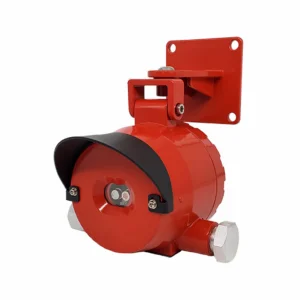
Highly sensitive ultraviolet light spectrum detection for fast-flashing clean gas and hydrogen fires.
View DetailsBanfora, located in the Cascades region of Burkina Faso, acts as a primary agricultural processing and industrial corridor. The city’s economic foundations, led by large-scale sugarcane processing (such as the SN SOSUCO industrial mills) and expanding cotton processing operations, present unique and highly volatile fire risks. Sugarcane bagasse storage, bio-ethanol distillation, and mechanical processing plants operate under high ambient temperatures and dry harmattan winds, creating environments where explosive dust clouds and flammable vapors are common.
Standard smoke or heat detectors cannot survive or perform adequately in these dusty, high-velocity air-flow systems. To prevent catastrophic dust explosions and flash fires in mills, ethanol storage tanks, and conveyor transfer towers, operators require optical Triple Infrared (3IR) and UV/IR flame detectors. These sensors utilize sophisticated spectral band analysis to identify the carbon dioxide emission peak (4.3 microns) of hydrocarbon fires in under 5 seconds, ignoring agricultural dust clouds and welding arcs.
Navigating global industrial supply chains requires balancing strict safety compliance (EN54-10, SIL2, FM) with cost efficiency and custom project engineering.
Equipped with an in-house CNAS-accredited laboratory operating under ISO/IEC 17025. Products undergo continuous thermal, dust ingress, and false alarm rejection tests before shipping to overseas projects.
With our Chengdu and Deyang facilities, automated precision tooling lines significantly reduce fabrication costs, ensuring reliable high-speed flame detectors are accessible to developing markets.
From custom relay signal patterns and RS485 Modbus registers to heavy explosion-proof junction boxes. We tailor safety products to match the exact integration requirements of legacy plants.
Adhering strictly to ISO9001 quality management system standards, our core optical detectors and gas monitors have obtained a full range of authoritative certifications, including national compulsory Products Certification, explosion-proof certification, fire product certification, CPA measurement instrument type approval certificate, and international approvals such as CE and SIL. Additionally, we hold the honor of "National Quality Integrity Benchmark Enterprise" and are a key drafting organization for multiple safety system standards.
In the field of intellectual property, we maintain an innovation system with over 50 patents and software copyrights. These cover core technological areas, including a graphical monitoring system for gas detection and alarm that enables predictive maintenance based on historical data—reducing equipment failure rates by over 30%—and solenoid valves with flow monitoring functionality.
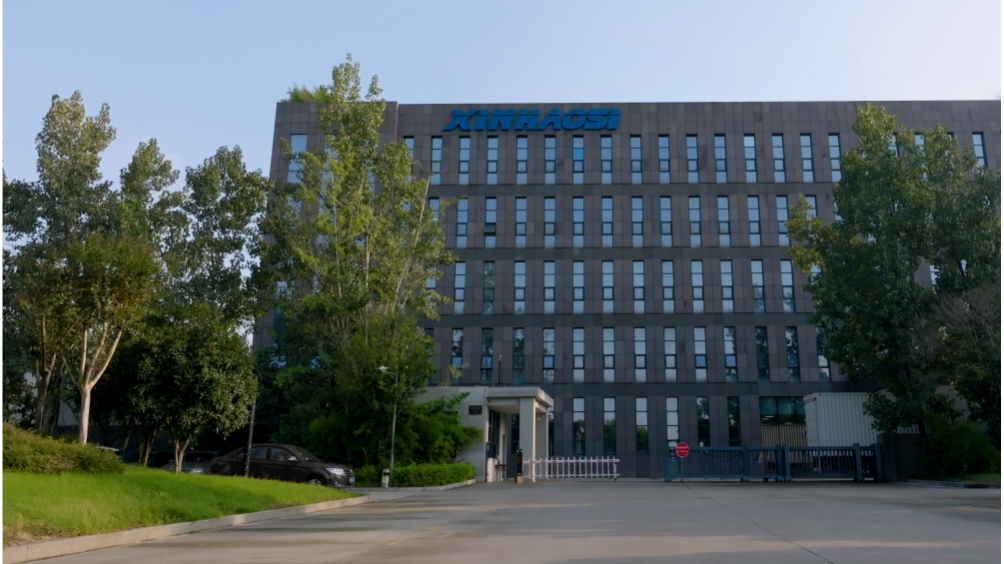

For over two decades, Xinhaosi has steadily built a comprehensive production and service system, developing from a localized pioneer into a global gas safety and flame detection systems supplier.
Startup & Launch: Established in April 2003. Launched our first-generation gas leakage and fire fighting monitoring solutions, establishing core engineering principles.
Scaling Production: Began production of gas safety valves and expanded OEM production lines. Relocated our corporate office to Longtan Industrial Park to handle growing capacity.
Rapid Growth: Achieved a milestone of 10 million gas safety and detector units sold. Moved manufacturing into the dedicated Chengdu factory building and launched integrated fire power monitoring systems.
IoT Integration: Launched our proprietary self-developed IoT platform. Expanded our product line with automatic fire alarms, emergency lighting, and evacuation systems. Certified as a national high-tech enterprise.
Manufacturing Expansion: Commenced construction of the Deyang manufacturing base. Established our Petrochemical & International Business Division to supply global markets. Awarded Sichuan Provincial Technology Center status.
Next-Gen Technologies: Deyang factory enters full operations. Launched urban gas pipeline monitoring products, wireless multi-sensor warning hubs, and AI-enabled safety solenoid valves.
Choosing between Ultraviolet (UV), Double Infrared (2IR), and Triple Infrared (3IR) sensors depends on target fuels, optical path obstructions, and environmental conditions.
| Detector Class | Sensor Configuration | Primary Fuels | Key Advantages | Best Application Environment |
|---|---|---|---|---|
| 3IR (Triple Infrared) | Three distinct IR spectral bands (e.g., 4.3µm, 4.0µm, 4.7µm) | Hydrocarbons, Ethanol, Sugarcane Bagasse, Diesel, Petrol | Highest immunity to false alarms (welding, sunlight, hot exhaust) | Outdoor mills, agricultural warehouses, heavy machinery bays |
| UV/IR Hybrid | 1 UV tube + 1 IR sensor in combination | Hydrocarbons, Hydrogen, Solvents, Methane | Extremely fast response time, requires both sensors to trigger | Refinery storage yards, chemical separation units |
| Single UV | Highly sensitive 185-260nm solar blind band sensor | Hydrogen, Ammonia, Clean Gases | Ultra-fast response to explosive gas releases | Cleanrooms, indoor machinery casings, turbine enclosures |
Integrate flame safety with certified toxic and combustible gas leak detection units to build a complete hazard prevention loop.
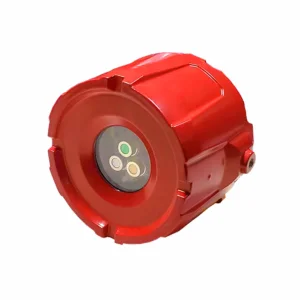
Intelligent digital signal processing (DSP) logic prevents false triggers from industrial operations.
View Details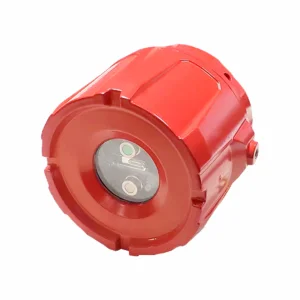
Dual spectrum monitoring offers robust false alarm rejection in dusty processing plants.
View Details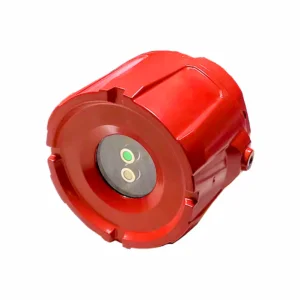
High-sensitivity IR channels for rapid identification of slow-developing smoldering fires.
View Details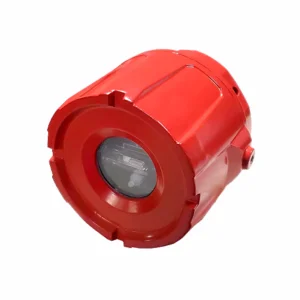
High-speed UV optical elements designed for indoor clean gas and pipeline combustion zones.
View Details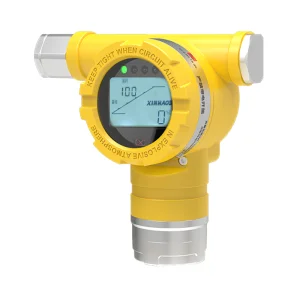
Robust industrial transmitter featuring modular electrochemical sensors for hazardous gas leaks.
View Details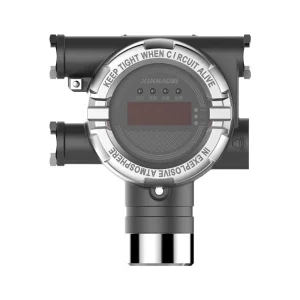
Explosion-proof design optimized for harsh mining and petrochemical refining atmospheres.
View Details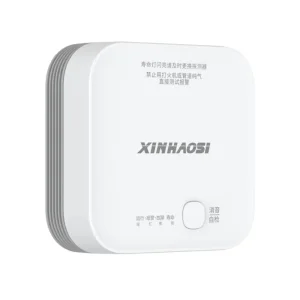
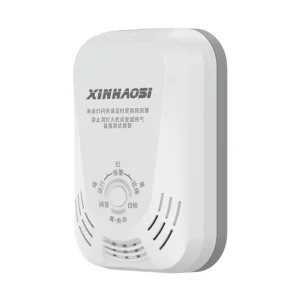
Compact, highly reliable gas leakage alarms with integrated sounder and valve outputs.
View Details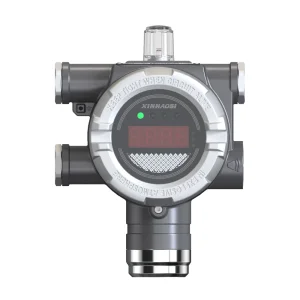
Smart transmitter featuring back-lit digital interface for rapid onsite gas level assessment.
View Details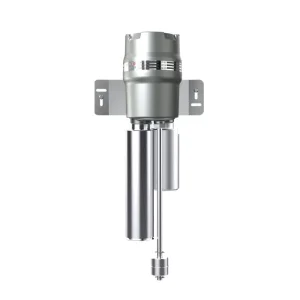
Get answers to critical technical questions regarding the deployment, operation, and maintenance of optical flame safety systems in heavy industries.
3IR (Triple Infrared) detectors analyze three narrow bands within the infrared spectrum (usually around 4.0 to 4.8 microns). They are highly immune to atmospheric interference and ignore welding arcs, hot machinery, and sunlight. UV/IR detectors combine an ultraviolet sensor and an infrared sensor. Because they require both elements to register energy signatures simultaneously, they respond rapidly to fast-flashing chemical or fuel fires, but are more susceptible to attenuation from thick dust clouds or oil films on the lens.
Suspended dust, such as cotton fibers or sugarcane bagasse, scatters optical wavelengths. In highly dusty areas, infrared radiation (specifically at 4.3 microns) penetrates dust better than ultraviolet radiation. Under these conditions, a Triple IR (3IR) detector is highly recommended. Regular maintenance using automated air-purge collars will clear dust accumulation off the sensor lens window, keeping the optical path clear without requiring frequent manual cleanings.
Yes. Our industrial flame detectors and gas transmitters are housed in copper-free aluminum alloy or 316 stainless steel explosion-proof enclosures. They conform to Ex d IIC T6 Gb explosive protection ratings, making them suitable for Class I, Division 1 & 2 gas hazard locations as well as Class II dust environments.
Yes. Our FD1020 and IFD2020 units are designed for easy integration. They provide 4-20mA analog signal loops, RS485 Modbus digital protocols, and three built-in relays (Alarm, Fault, and Auxiliary). This enables them to connect directly with industrial PLC systems, fire panels, or ESD (Emergency Shutdown) loops.
We provide comprehensive engineering support, beginning with optical field-of-view (FoV) calculations based on your factory layout. We manage secure shipping logistics to Burkina Faso and neighboring countries, and provide remote installation, commissioning guidance, and direct technical support through our engineers.
Connect with our technical design team today. Get detailed drawings, field-of-view diagnostics, and direct wholesale pricing for your project.